What Are Macros? Protein, Carbs and Fat Explained
Macros, short for macronutrients, are the three nutrients your body needs in large amounts: protein, carbohydrates and fat.
Read more →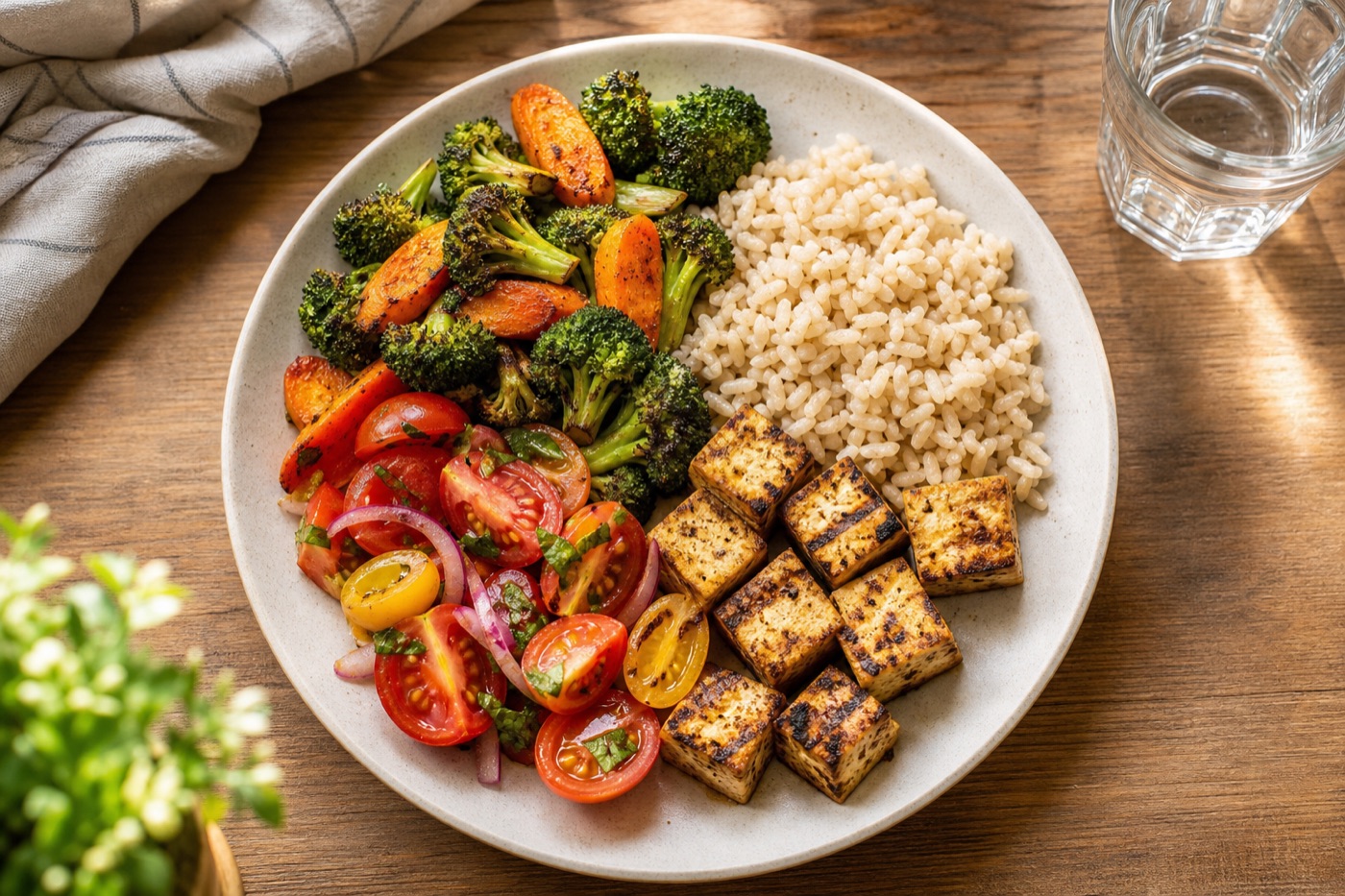
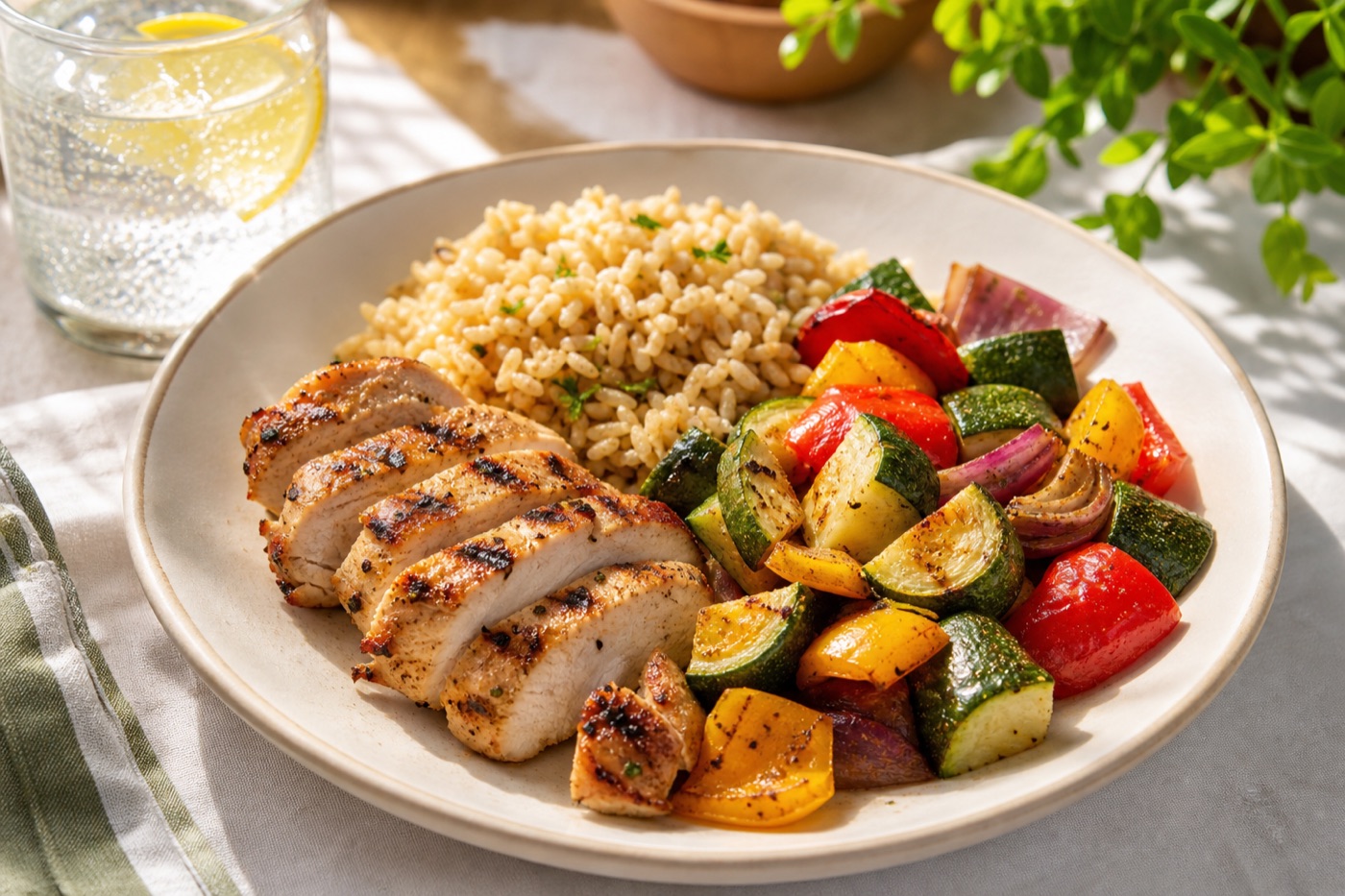
A balanced plate is a simple visual template for building meals. Fill about half your plate with vegetables and fruit, about a quarter with whole grains or other starchy foods, and about a quarter with a protein food, then add a little healthy fat and a drink like water or milk. It isn’t a strict formula; it’s a flexible guide that works with almost any cuisine, budget or way of eating.
In 2011 the USDA replaced its food pyramid with a plate icon. It shows sections for vegetables, fruits, grains and protein, with vegetables and fruit together filling about half, plus dairy on the side. Harvard’s Healthy Eating Plate builds on the same idea and adds a few extra cues: choose whole grains over refined ones, use healthy oils, drink water and limit sugary drinks. Many other countries publish their own plate or food-guide graphics, adapted to local foods.
The plate is a pattern, not a menu. Here’s how it can look in different kitchens:
| Cuisine | Half: vegetables and fruit | Quarter: grains or starch | Quarter: protein |
|---|---|---|---|
| Mexican | Cabbage slaw, salsa, grilled peppers and onions | Corn tortillas | Black beans or grilled chicken |
| South Asian | Spinach or mixed-vegetable sabzi, sliced cucumber and tomato | Whole-wheat roti or brown rice | Dal or chickpea curry |
| Japanese | Sautéed spinach, pickled vegetables, miso soup with seaweed | Steamed rice | Grilled fish or tofu |
| West African | Stewed greens, tomato and onion sauce | Jollof rice or boiled yam | Grilled fish or black-eyed peas |
| Southern US | Collard greens, sliced tomatoes | Cornbread | Black-eyed peas or baked chicken |
| Mediterranean | Greek salad, roasted eggplant | Whole-wheat pita or bulgur | Lentils, hummus or grilled fish |
Bowls, stews, curries and casseroles count too. Simply aim for similar proportions within the mix, such as loading a stir-fry with vegetables or stirring a handful of greens into soup.
The proportions are a starting point, and you can shift them to suit your life:
The same thinking works beyond dinner. Pair a fruit or vegetable with a protein and, when it makes sense, a fiber-rich carbohydrate:
A balanced plate is half vegetables and fruit, a quarter whole grains or starch, and a quarter protein, with a little healthy fat and water or milk to drink. It’s easy to remember, fits any cuisine and adapts to your appetite, budget and goals. Use it as a gentle guide rather than a test, and let your favorite foods fill in the sections.
US guidelines group foods into vegetables, fruits, grains, protein foods and dairy, which includes fortified soy alternatives. A balanced plate draws from most of these groups at each meal, with vegetables and fruit filling about half.
Yes. For mixed dishes like stews, curries, stir-fries and casseroles, aim for roughly the same proportions within the dish: plenty of vegetables, some protein and a moderate amount of grain or starch. You can also add a side salad or fruit to round it out.
Frozen and canned vegetables, dried or canned beans, eggs, oats, rice, potatoes, cabbage, carrots and bananas are affordable building blocks. Buying store brands and seasonal produce, and cooking extra for leftovers, also stretches your budget.
The same idea works for children, with portions sized to their age and appetite. Kids' needs vary a lot as they grow, so offer a variety of foods and let them decide how much to eat. A pediatrician or registered dietitian can answer specific questions.
This guide is general information, not medical advice. For a health condition, pregnancy or a history of disordered eating, please talk with a doctor or registered dietitian.
Macros, short for macronutrients, are the three nutrients your body needs in large amounts: protein, carbohydrates and fat.
Read more →A calorie deficit happens when you take in fewer calories than your body uses over time, so it draws on stored energy and weight tends to go down.
Read more →