Healthy Fats Explained: Which Fats to Eat and Which to Limit
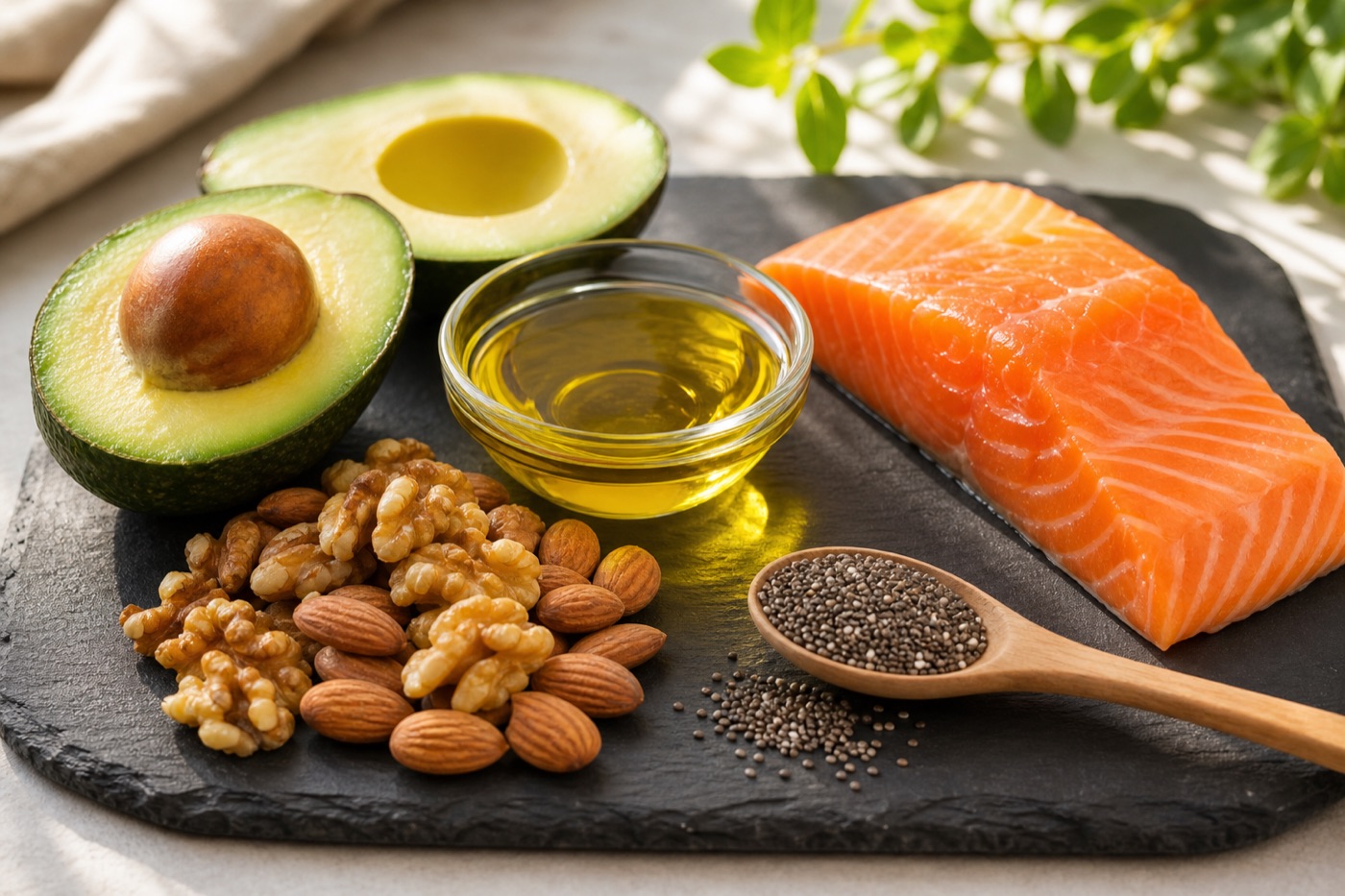
Healthy fats are mainly unsaturated fats, found in olive and canola oil, avocados, nuts, seeds and fatty fish.
Read more →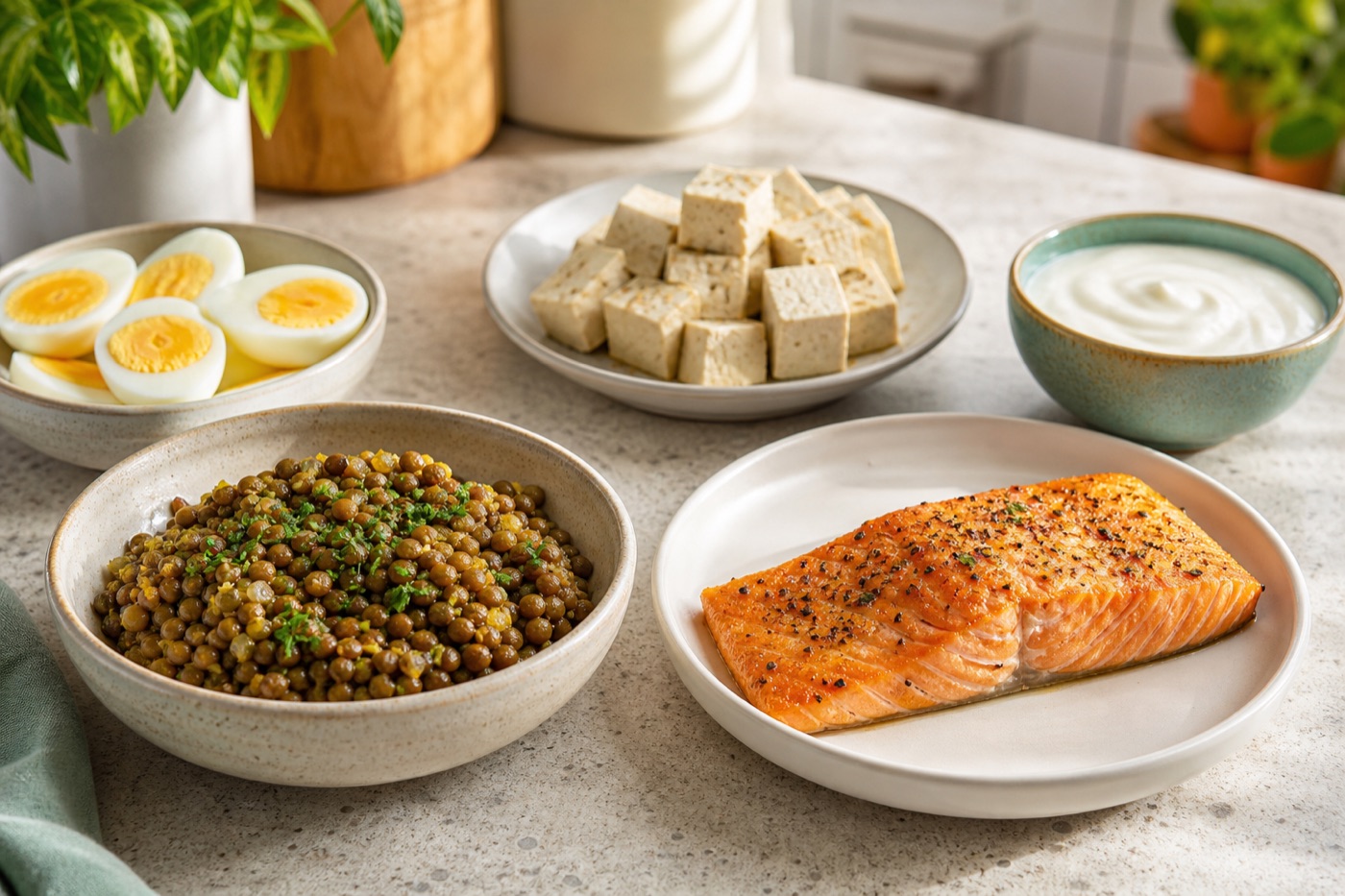
Most healthy adults need at least 0.8 grams of protein per kilogram of body weight each day, which is the Recommended Dietary Allowance (RDA). For someone who weighs 70 kg (about 154 pounds), that’s roughly 56 grams. Your needs can be higher if you’re pregnant or breastfeeding, very active, recovering from illness or getting older, so think of the RDA as a floor rather than a ceiling.
To estimate your minimum, multiply your weight in kilograms by 0.8. If you think in pounds, multiply your weight by about 0.36 instead.
| Body weight | Approximate RDA-based minimum |
|---|---|
| 50 kg (110 lb) | 40 g |
| 60 kg (132 lb) | 48 g |
| 70 kg (154 lb) | 56 g |
| 80 kg (176 lb) | 64 g |
| 90 kg (198 lb) | 72 g |
| 100 kg (220 lb) | 80 g |
The RDA is set high enough to cover nearly all healthy adults, so it isn’t a stingy number. Plenty of people eat more than this and stay comfortably within the acceptable range for protein, which the National Academies put at 10% to 35% of daily calories. Our guide to macros shows how that range fits alongside carbohydrates and fat.
Several situations raise protein needs:
On the other hand, people with kidney disease are sometimes told to limit protein. If you have a kidney condition, talk with your doctor or a registered dietitian before changing how much you eat.
The amounts below are approximate and vary by recipe, variety and preparation.
| Food | Typical portion | Protein |
|---|---|---|
| Chicken breast, cooked | 3 oz (85 g) | about 26 g |
| Canned tuna, drained | 3 oz | about 20 g |
| Plain Greek yogurt | 6 oz container | about 17 g |
| Firm tofu | 1/2 cup | about 10–20 g, depending on type |
| Lentils, cooked | 1/2 cup | about 9 g |
| Edamame, shelled | 1/2 cup | about 9 g |
| Quinoa, cooked | 1 cup | about 8 g |
| Milk or soy milk | 1 cup | about 7–8 g |
| Peanut butter | 2 tbsp | about 7 g |
| Large egg | 1 | about 6 g |
| Almonds | 1 oz (about 23 nuts) | about 6 g |
You can look up thousands of other foods in USDA FoodData Central, the government’s free nutrient database.
Instead of saving most of your protein for dinner, many people feel more satisfied when every meal includes some. Here’s an example day that lands at around 80 grams:
Swap the chicken for tempeh or extra-firm tofu and the yogurt for a high-protein soy version, and you’ll still reach a solid total.
You don’t need meat to meet your needs. Beans, lentils, peas, tofu, tempeh, edamame, nuts, seeds and whole grains all contribute. Plant proteins differ in their amino acid makeup, but eating a variety over the course of the day covers your bases, so there’s no need to pair specific foods at every meal. Our guide to plant-based eating has more ideas.
For healthy adults, eating somewhat above the RDA is generally considered safe, especially within the 10-35% range. The bigger risk is often what protein pushes off the plate. If oversized portions of meat leave no room for vegetables, fruit, beans and whole grains, you may come up short on fiber. Protein powders and bars can be handy, but most people can meet their needs with ordinary food, and dietary supplements aren’t reviewed by the FDA for safety or effectiveness before they’re sold.
Start with 0.8 grams of protein per kilogram of body weight as your daily minimum, then adjust upward if you train hard, are older, or are pregnant or breastfeeding. Spread it across your meals, mix in plant sources, and keep enough space for the foods that bring fiber. A balanced plate makes that easy to do without counting.
Multiply your body weight in pounds by about 0.36 to get the RDA-based minimum in grams. For example, someone who weighs 150 pounds needs at least about 54 grams of protein a day. Your needs may be higher depending on age, activity and life stage.
Yes. Beans, lentils, tofu, tempeh, edamame, nuts, seeds, dairy and eggs can all cover your needs. Eating a variety of plant proteins across the day provides all the essential amino acids, so you don't need to combine foods at every meal.
For healthy adults, eating somewhat more than the RDA is generally considered safe, especially if protein stays within about 10% to 35% of calories. People with kidney disease may need to limit protein, so they should follow their doctor's advice.
Most people can meet their protein needs from regular meals and snacks. Powders can be convenient for busy days or higher needs, but they aren't necessary. Dietary supplements, including protein powders, aren't reviewed by the FDA for safety or effectiveness before they're sold.
This guide is general information, not medical advice. For a health condition, pregnancy or a history of disordered eating, please talk with a doctor or registered dietitian.
Healthy fats are mainly unsaturated fats, found in olive and canola oil, avocados, nuts, seeds and fatty fish.
Read more →The Dietary Guidelines for Americans advise adults to keep sodium under 2,300 milligrams a day, about the amount in one teaspoon of table salt.
Read more →The National Academies set adequate total water intakes of about 3.7 liters a day for men and 2.7 liters for women, counting water from all drinks and foods.
Read more →