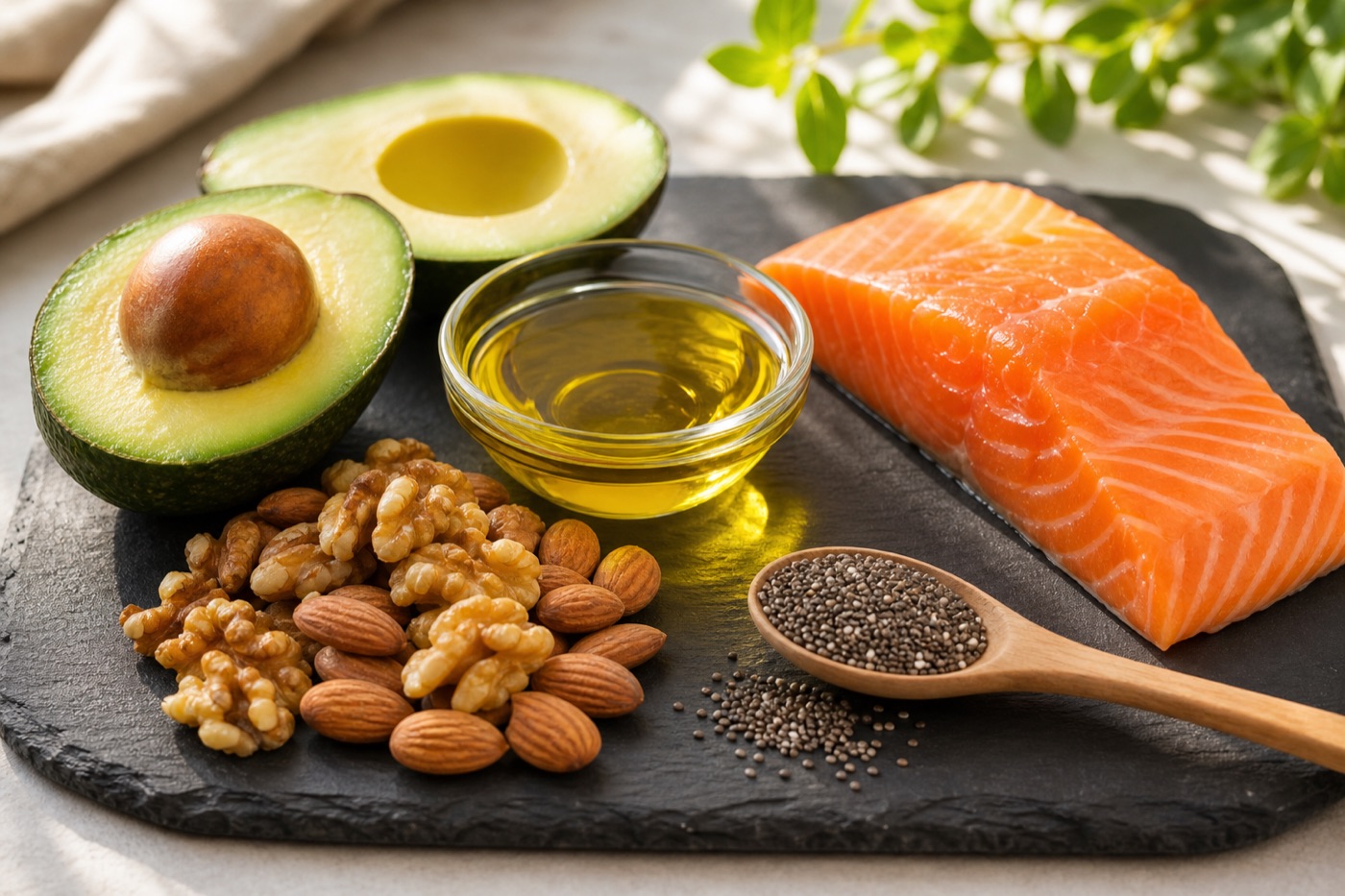
Healthy Fats Explained: Which Fats to Eat and Which to Limit
Healthy fats are mainly unsaturated fats, found in olive and canola oil, avocados, nuts, seeds and fatty fish.
Read more →Home › Nutrients
Protein, fiber, fats, vitamins, water and salt: what each one does and how much you need.
Healthy fats are mainly unsaturated fats, found in olive and canola oil, avocados, nuts, seeds and fatty fish.
Read more →Most healthy adults need at least 0.8 grams of protein per kilogram of body weight per day, the Recommended Dietary Allowance.
Read more →The Dietary Guidelines for Americans advise adults to keep sodium under 2,300 milligrams a day, about the amount in one teaspoon of table salt.
Read more →The National Academies set adequate total water intakes of about 3.7 liters a day for men and 2.7 liters for women, counting water from all drinks and foods.
Read more →Probiotics are live microorganisms, such as certain bacteria and yeasts, that may benefit health when consumed in adequate amounts, and they're found in some yogurts, kefir and other fermented foods.
Read more →Complex carbohydrates are starches and fibers made of long chains of sugar molecules.
Read more →Electrolytes are minerals that carry an electric charge when dissolved in body fluids, including sodium, potassium, chloride, calcium, magnesium, phosphate and bicarbonate.
Read more →Micronutrients are the vitamins and minerals your body needs in small amounts to make energy, build bones and blood, support immunity and keep cells working.
Read more →Added sugars are sugars and syrups put into foods during processing or preparation, or added at the table, such as table sugar, honey, syrups and fruit juice concentrates.
Read more →Dietary fiber is the part of plant foods that your body can't fully digest.
Read more →