Net Carbs vs Total Carbs: What's the Difference?
Total carbs are all the carbohydrates in a food, including starch, sugars and fiber, and on US labels sugar alcohols too.
Read more →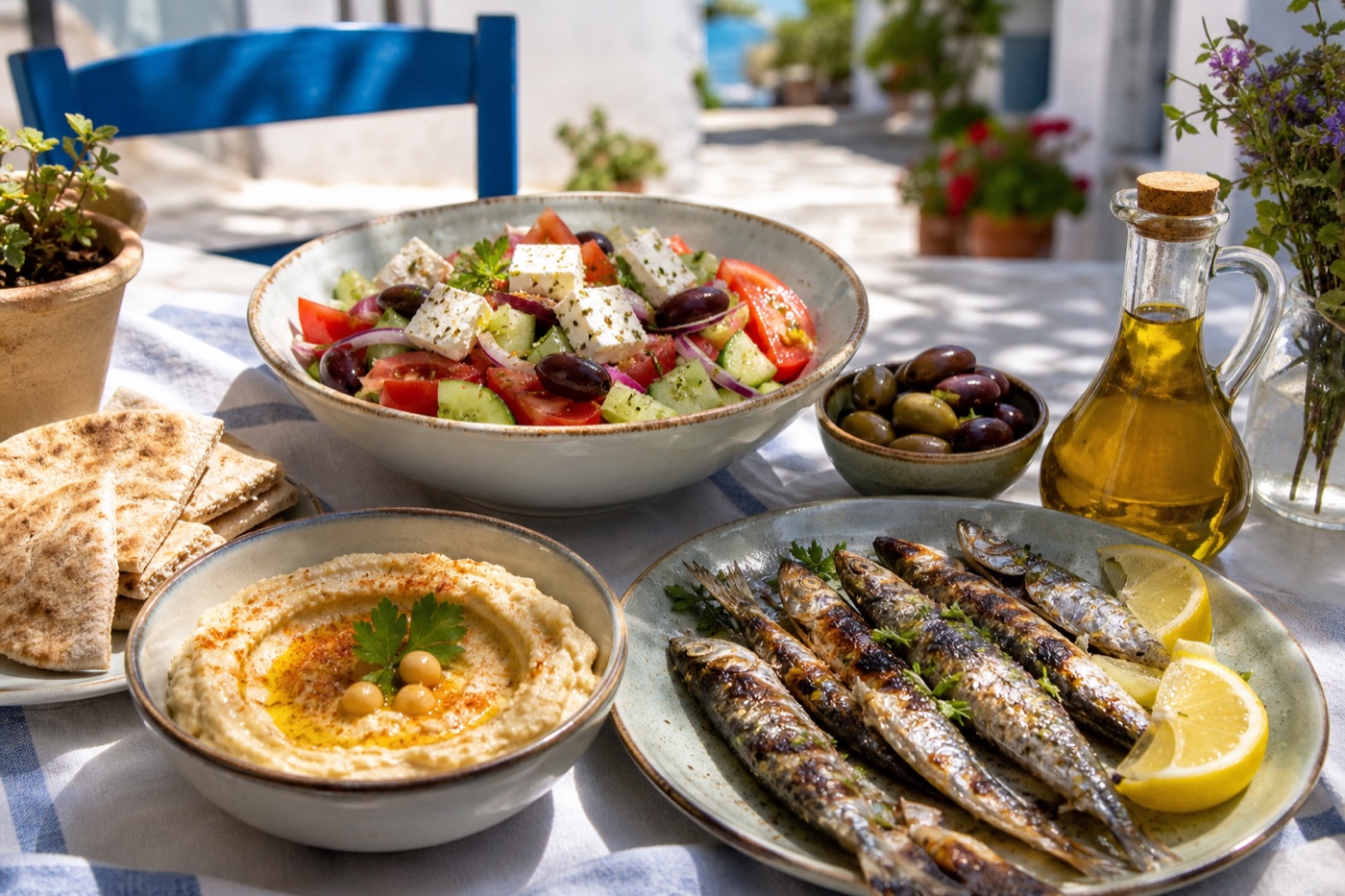
The Mediterranean diet is an eating pattern inspired by the traditional cooking of countries around the Mediterranean Sea, such as Greece, Italy, Spain, Lebanon, Turkey and Morocco. It’s built on vegetables, fruit, whole grains, beans, nuts, olive oil and herbs, with fish and seafood a few times a week, moderate amounts of yogurt, cheese, eggs and poultry, and only small amounts of red meat and sweets. It’s less a strict diet than a way of eating, and it’s one of the most studied patterns for heart health.
| How often | Foods |
|---|---|
| Every day | Vegetables, fruit, whole grains, beans and lentils, nuts and seeds, olive oil, herbs and spices |
| Several times a week | Fish and seafood |
| Moderate amounts, daily to weekly | Yogurt, cheese, eggs, poultry |
| Occasionally | Red meat, sweets, processed meats |
| To drink | Mostly water; coffee and tea are common too |
Olive oil is the main cooking fat, used for sautéing, roasting and dressing salads. Meals tend to be shared and unhurried, and regular physical activity is part of daily life in the traditional version.
The Mediterranean diet has been studied for decades, and the findings are consistently encouraging. Research has linked it with a lower risk of heart disease and stroke. A large trial in Spain called PREDIMED found that people at high cardiovascular risk who followed a Mediterranean diet supplemented with extra-virgin olive oil or nuts had a lower rate of major cardiovascular events, such as heart attacks and strokes, than people advised to follow a lower-fat diet.
The Dietary Guidelines for Americans, 2020-2025, included a Healthy Mediterranean-Style Dietary Pattern among their recommended eating patterns, and the American Heart Association highlights the approach as heart-healthy. Much of its strength comes from what it includes: plenty of fiber, unsaturated fats and plant compounds, with relatively little added sugar and processed meat.
| Meal | Example |
|---|---|
| Breakfast | Plain Greek yogurt with sliced figs or berries, walnuts and a drizzle of honey |
| Lunch | Lentil and vegetable soup with a slice of whole-grain bread and a few olives |
| Snack | An orange and a small handful of almonds |
| Dinner | Baked salmon or sardines with roasted peppers and zucchini, plus a bulgur salad with parsley, lemon and olive oil |
| Dessert | Fresh fruit, or a small sweet on special occasions |
You don’t have to cook Greek or Italian food every night. The principles travel well:
On a budget, lean on canned sardines and salmon, dried or canned beans, frozen vegetables, seasonal produce and any affordable plant oil. Canola oil, for example, is rich in unsaturated fat and usually costs less than olive oil. Our guide to healthy fats explains why the type of fat matters.
Traditional Mediterranean eating often includes a glass of wine with meals, but health organizations don’t recommend starting to drink for health reasons. If you don’t drink, there’s no reason to begin. If you do, the 2020-2025 Dietary Guidelines advised limiting intake to two drinks or fewer a day for men and one or fewer for women, and some people, including anyone who is pregnant or has certain health conditions, shouldn’t drink at all.
If you’d like to lean even further into plants, our guide to plant-based eating shows how. And if blood pressure is your main concern, the DASH diet shares many of the same foods.
The Mediterranean diet is a flexible, plant-forward pattern built on vegetables, fruit, whole grains, beans, nuts, olive oil and fish, with fewer red and processed meats and sweets. Strong research links it to better heart health, and it adapts easily to many cuisines and budgets. Start with a few swaps and let the habit grow from there.
It can support weight loss as part of an overall healthy routine, mainly because its fiber-rich foods are filling. It isn't designed as a weight-loss plan, though, and olive oil and nuts are calorie-dense, so portions still matter if weight is a goal.
No. Wine is part of some traditional versions, but health organizations don't recommend starting to drink for health reasons. You get the benefits of the pattern from its foods, so water, tea and coffee work perfectly well.
Yes. Dried and canned beans, lentils, oats, frozen vegetables, seasonal fruit, canned sardines or salmon, and an affordable plant oil like canola can form the backbone of the pattern at a modest cost.
Yes. Pasta is a traditional staple in parts of the Mediterranean. Whole-grain versions add fiber, and serving pasta with vegetables, beans or fish and a modest drizzle of olive oil keeps it in the spirit of the pattern.
This guide is general information, not medical advice. For a health condition, pregnancy or a history of disordered eating, please talk with a doctor or registered dietitian.
Total carbs are all the carbohydrates in a food, including starch, sugars and fiber, and on US labels sugar alcohols too.
Read more →Ultra-processed foods are industrial products made mostly from substances extracted or refined from foods, often with additives such as flavorings, emulsifiers or colors that you wouldn't use in a home kitchen.
Read more →Clean eating is an informal way of describing a diet built mostly on whole or minimally processed foods, such as vegetables, fruits, whole grains, beans, nuts, fish and lean proteins, with fewer heavily processed products.
Read more →