Net Carbs vs Total Carbs: What's the Difference?
Total carbs are all the carbohydrates in a food, including starch, sugars and fiber, and on US labels sugar alcohols too.
Read more →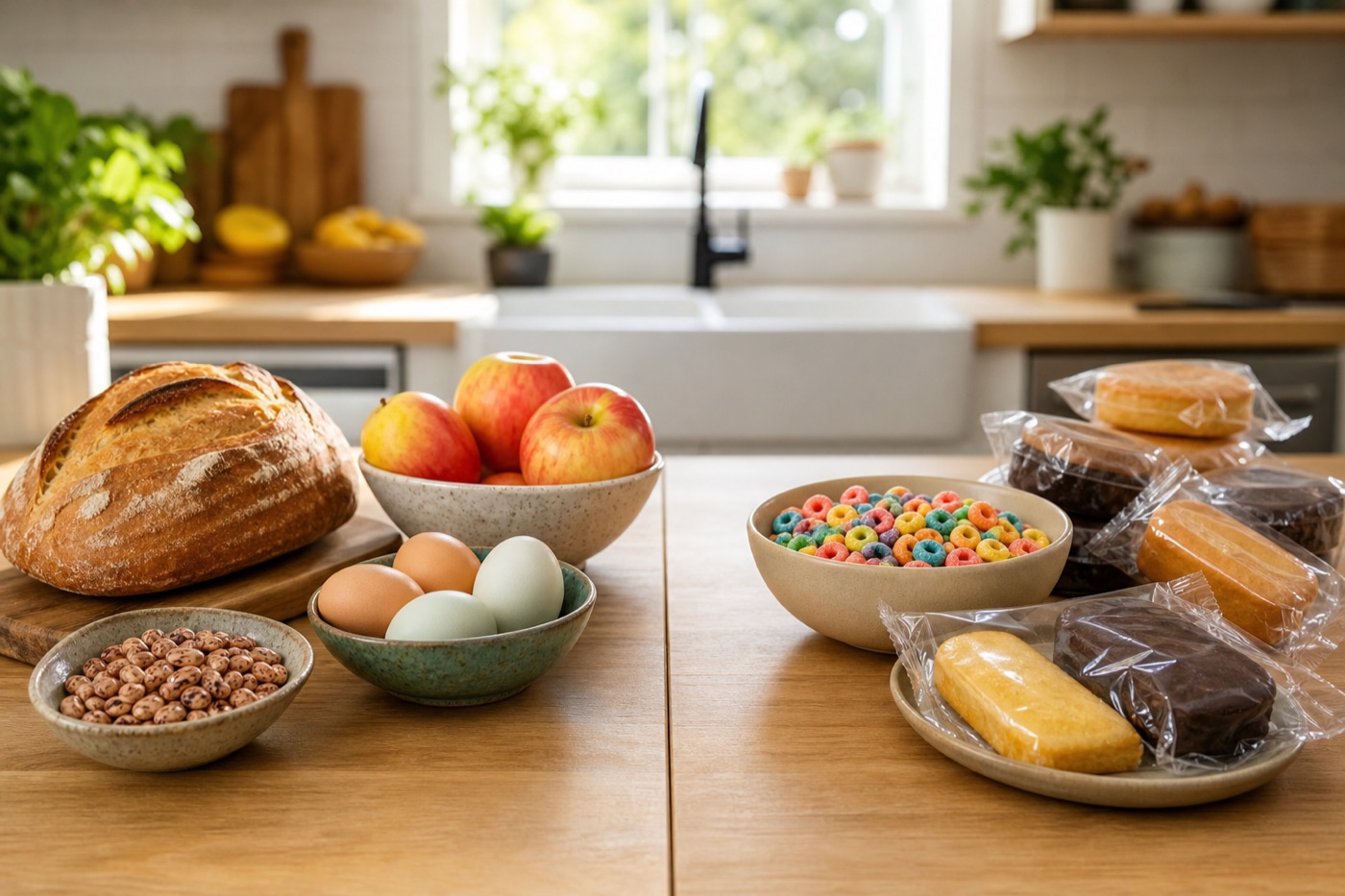
Ultra-processed foods are industrially made products built mostly from ingredients extracted or refined from whole foods, such as starches, oils, sugars and protein isolates, often combined with additives like flavorings, emulsifiers, sweeteners or colors. Think soft drinks, packaged snack cakes, many breakfast cereals, instant noodles and processed meats. They’re convenient and widely eaten, and the most practical goal is to make them a smaller part of your week rather than to banish them.
The most widely used way to group foods by processing is the NOVA classification, developed by researchers at the University of São Paulo in Brazil. It sorts foods into four groups:
| NOVA group | What it means | Examples |
|---|---|---|
| 1. Unprocessed or minimally processed | Whole foods, sometimes cleaned, frozen, dried, ground or pasteurized | Fresh or frozen vegetables, fruit, plain milk, eggs, rice, dried beans, plain oats, unsalted nuts |
| 2. Processed culinary ingredients | Substances taken from foods and used in cooking | Olive and vegetable oils, butter, sugar, salt, honey |
| 3. Processed foods | Group 1 foods with group 2 ingredients added, made with simple methods | Canned vegetables in brine, cheese, simple fresh bread, canned fish, salted nuts |
| 4. Ultra-processed foods | Industrial formulations with ingredients rarely used in home cooking | Soft drinks, packaged cookies and chips, sweetened cereals, instant soups, hot dogs, many ready meals |
The line between groups 3 and 4 is where most confusion happens. A loaf made from flour, water, yeast and salt counts as processed. A packaged loaf that also contains emulsifiers, added sugars and preservatives is usually considered ultra-processed.
A large body of observational research has linked diets high in ultra-processed foods with higher risks of several health problems, including weight gain, type 2 diabetes and heart disease. Observational studies can’t prove cause and effect on their own. However, a small, tightly controlled study at the National Institutes of Health found that people ate more calories when offered an ultra-processed diet than when offered a minimally processed one matched for nutrients like sugar, fat and fiber.
Scientists are still working out why. Possible reasons include:
There’s also lively debate about how much of the effect comes from processing itself and how much from the nutrient profile of these products.
You don’t need a chemistry degree. A few clues help:
The category is broad, and some of its members are genuinely useful. Packaged whole-grain bread, unsweetened fortified plant milks and some meat alternatives may count as ultra-processed under NOVA while still providing fiber, protein, calcium or other nutrients. A sugary soda and a fortified whole-grain cereal are not nutritional equals, even if they share a category.
Convenience matters too. Long work hours, caregiving, disability, limited kitchen space and tight budgets are real, and nobody should feel judged for relying on packaged food. The aim is progress, not purity.
Ultra-processed foods are industrial products made largely from refined ingredients and additives, and diets heavy in them are linked with poorer health. You don’t need to eliminate them. Building most meals from whole and minimally processed foods, and picking the more nutritious options when you do buy packaged, is a balanced and realistic approach. For a broader look at eating more whole foods, see our guide to clean eating.
No. Processing includes freezing, canning, drying, pasteurizing and fermenting, and many processed foods are nutritious, such as frozen vegetables, canned beans, plain yogurt and cheese. The concern centers on ultra-processed products, especially those high in added sugar, sodium and refined starch.
It depends on how it's made. Simple bread made from flour, water, yeast and salt counts as processed. Many packaged breads with emulsifiers, added sugars and preservatives are classified as ultra-processed, though whole-grain versions still provide useful fiber.
Most are, under the NOVA system, because they're made from protein isolates, oils and additives. They can still fit into a healthy diet, especially if they replace processed meats, but whole plant proteins like beans, lentils and tofu are simpler everyday choices.
Lean on low-cost staples like oats, rice, dried or canned beans, eggs, frozen vegetables and seasonal fruit. Cooking in batches and keeping simple snacks like popcorn kernels, peanuts and bananas on hand also helps reduce reliance on packaged foods.
This guide is general information, not medical advice. For a health condition, pregnancy or a history of disordered eating, please talk with a doctor or registered dietitian.
Total carbs are all the carbohydrates in a food, including starch, sugars and fiber, and on US labels sugar alcohols too.
Read more →Clean eating is an informal way of describing a diet built mostly on whole or minimally processed foods, such as vegetables, fruits, whole grains, beans, nuts, fish and lean proteins, with fewer heavily processed products.
Read more →Intermittent fasting is an eating pattern that cycles between set periods of eating and fasting.
Read more →