Healthy Fats Explained: Which Fats to Eat and Which to Limit
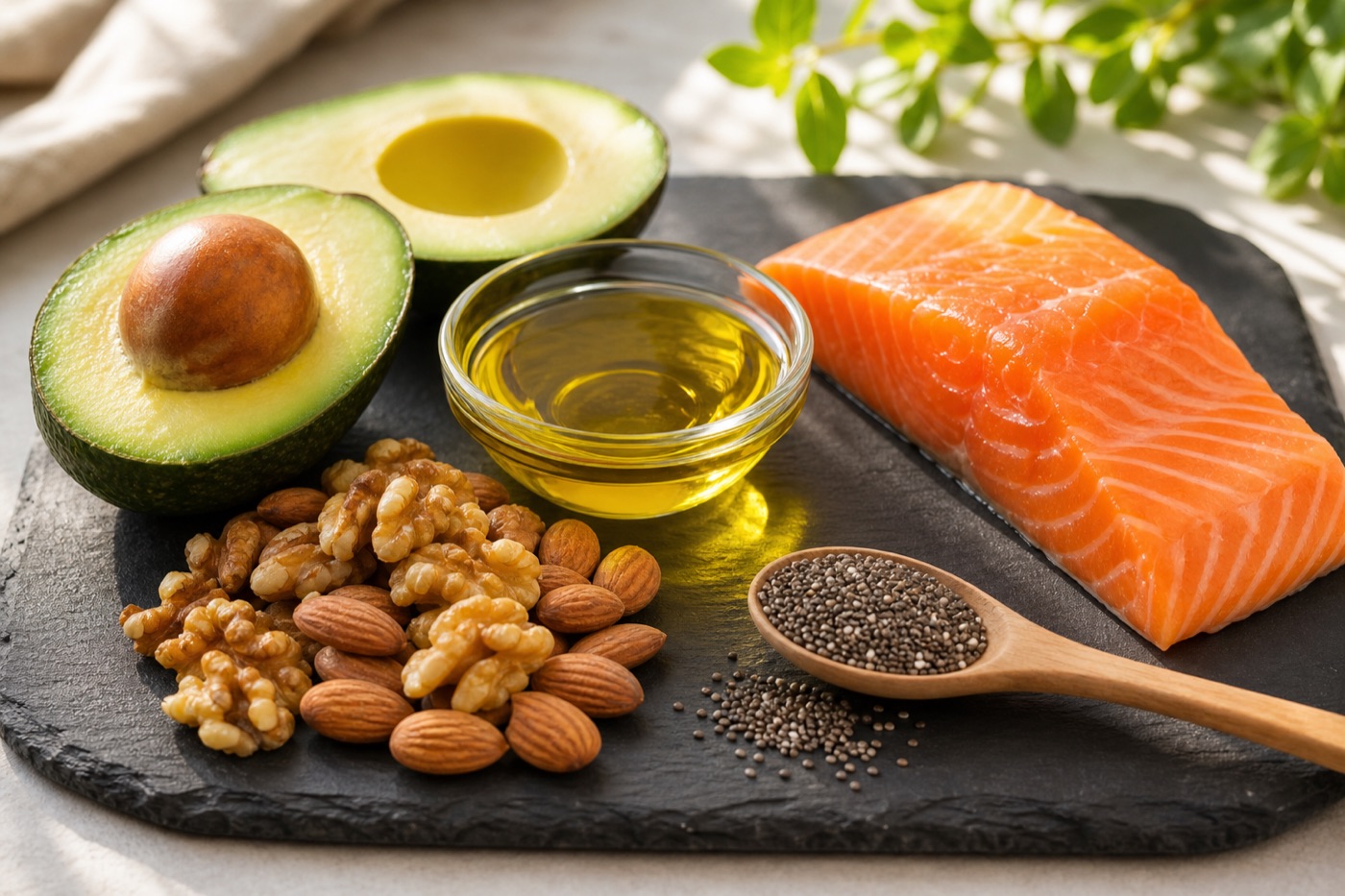
Healthy fats are mainly unsaturated fats, found in olive and canola oil, avocados, nuts, seeds and fatty fish.
Read more →
Added sugars are sugars and syrups put into foods and drinks during processing, cooking or at the table. That includes table sugar, brown sugar, honey, maple syrup, agave, corn syrup and fruit juice concentrates. It doesn’t include the sugar naturally present in whole fruit, vegetables or plain milk. US guidelines advise keeping added sugars below 10% of daily calories, which is about 50 grams on a 2,000-calorie diet.
Sugar molecules are broadly similar wherever they come from, but the package they arrive in makes a big difference:
So an apple and an apple-flavored candy both contain sugar, but they’re very different foods. Keep in mind that honey and maple syrup count as added sugars when you add them, even though they’re natural products.
| Organization | Recommendation | On a 2,000-calorie diet |
|---|---|---|
| Dietary Guidelines for Americans, 2020-2025 | Less than 10% of calories from added sugars from age 2; avoid added sugars for children under 2 | Under 50 g (about 12 teaspoons) |
| American Heart Association | No more than about 25 g (6 teaspoons) a day for most women and 36 g (9 teaspoons) for most men | Fixed amounts, not percentages |
| World Health Organization | Free sugars below 10% of energy, with further benefits below 5% | Under 50 g, ideally under 25 g |
The Daily Value for added sugars on US Nutrition Facts labels is 50 grams. A teaspoon of sugar weighs about 4 grams, which helps you picture these numbers.
Sweetened drinks are the biggest single source of added sugars in the American diet. A 12-ounce can of regular soda often contains close to 10 teaspoons of sugar. Other common sources include:
US Nutrition Facts labels now list added sugars on their own line, “Includes Xg Added Sugars,” with a % Daily Value beside it. A quick rule of thumb from the FDA:
The ingredient list helps too. Added sugars go by many names, including cane sugar, brown sugar, high-fructose corn syrup, corn syrup, dextrose, maltose, sucrose, molasses, honey, maple syrup, agave nectar, rice syrup and fruit juice concentrate. When several of these appear, the total can add up even if none of them is listed first.
You don’t have to give up sweetness. Small changes make a real difference:
Low- and no-calorie sweeteners permitted by the FDA are considered safe within acceptable daily intake levels, and some people use them as a bridge while cutting back on sugar. However, the World Health Organization has advised against relying on non-sugar sweeteners as a way to control body weight. Water and unsweetened drinks remain the simplest options. If you have diabetes, your care team can help you decide what fits your plan.
Added sugars are the sugars and syrups put into foods and drinks, not the natural sugar in whole fruit or plain milk. Aim to keep them under 10% of your calories, about 50 grams on a 2,000-calorie diet, or lower if you follow the American Heart Association’s advice. Start with sugary drinks, check the Added Sugars line, and keep enjoying sweetness in amounts that work for you. To see how sugar fits within the wider world of carbohydrates, read our guide to complex carbs, and for help spotting heavily processed products, see ultra-processed foods.
Yes. Honey, maple syrup and agave are natural products, but when you add them to food or drinks they count as added sugars. They provide sweetness and calories much like table sugar, so the same daily limits apply.
No. The sugar in whole fruit comes packaged with fiber, water, vitamins and plant compounds, and fruit is a key part of a healthy diet. Fruit juice is a different story, since it lacks most of the fiber, so it's best kept to modest amounts.
On a 2,000-calorie diet, the Dietary Guidelines limit of less than 10% of calories works out to under about 12 teaspoons (50 grams). The American Heart Association suggests a lower limit of about 6 teaspoons for most women and 9 for most men.
Low- and no-calorie sweeteners permitted by the FDA are considered safe within acceptable intake levels, and some people use them while cutting back. The World Health Organization advises against relying on them for weight control, so water and unsweetened drinks remain the simplest choice.
This guide is general information, not medical advice. For a health condition, pregnancy or a history of disordered eating, please talk with a doctor or registered dietitian.
Healthy fats are mainly unsaturated fats, found in olive and canola oil, avocados, nuts, seeds and fatty fish.
Read more →Most healthy adults need at least 0.8 grams of protein per kilogram of body weight per day, the Recommended Dietary Allowance.
Read more →The Dietary Guidelines for Americans advise adults to keep sodium under 2,300 milligrams a day, about the amount in one teaspoon of table salt.
Read more →